Through Our Eyes: Living and Thriving
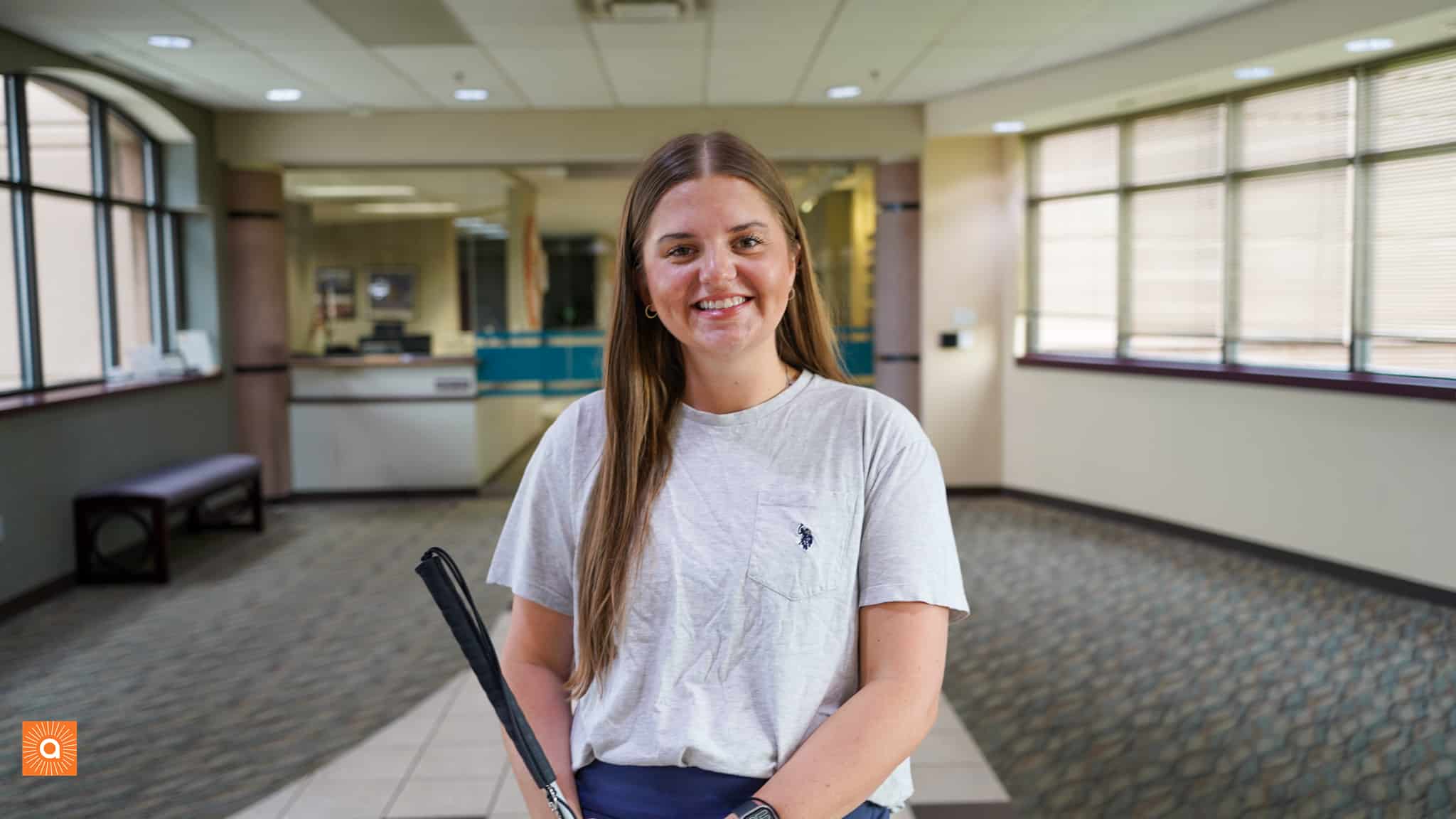
“I’m not going to let anything stop me, that’s just it.” – Riley Rolen.
It was a cool fall Saturday evening when Riley was walking back from a football game with her family. At the time, Riley was 21 years old and attending Oklahoma State University. She had just finished attending an OSU Cowboys football game with her family, when during their walk back from the stadium, Riley said to her father: “Hey Dad, I think its time for you to take my car home, I don’t feel safe driving it anymore.”
Usher Syndrome
When Riley was born, it was immediately apparent that she could not hear. In fact, Riley herself would tell me that she was one of the first children in Tulsa, Oklahoma, to fail a hearing screening and then, at 18 months of age, she received a Cochlear implant. On a Halloween evening while 3-year-old Riley was trick-or-treating, her parents noticed that she was bumping into objects like mail boxes, tripping over curbs, and struggling with obstacles. At age 5, Riley received her second Cochlear implant. And by 13 she was officially diagnosed with Usher Syndrome.
Usher Syndrome is a rare genetic condition that causes partial or total hearing loss, as well as an eye condition known as Retinitis Pigmentosa.
“I was given the option at an early age to attend a school for the deaf,” explains Riley. “But my parents felt very strongly that I should be mainstreamed and learn how to interact with other kids my age.”
Not only did Riley attend a traditional public school, she excelled.
Growing up in a Hearing and Seeing World
With her vision being relatively stable and having to only contend with night blindness during her teenage years, Riley was able to drive. She remained extremely active in high school, being involved in student counsel, cheerleading, and serving as an athletic trainer for multiple sports.
“I’m not going to let anything stop me, that’s just it,”declares Riley.
Riley then went on to Oklahoma State University where she majored in Human Development and Family Science; however, it was around that time when her vision began to deteriorate.
“I started making driving errors that I knew could have put myself or others in danger,” she says. “It was an extremely hard decision when I stopped driving, I will never forget that day.”
After that tough decision, what didn’t change was Riley’s academic performance. She excelled in her studies, spent time with friends, and never missed a football or baseball game. During the summers, she served as a camp counselor.
After graduating from OSU, Riely took a year off and then pursued a Master’s degree in marriage and family therapy.
“I’m not going to let anything stop me, that’s just it,” declares Riley.
Further Vision loss and Alphapointe
Riley was married by 2023, and finished her Master’s program in 2024, but it was around this time she noticed a dramatic change in her remaining vision.
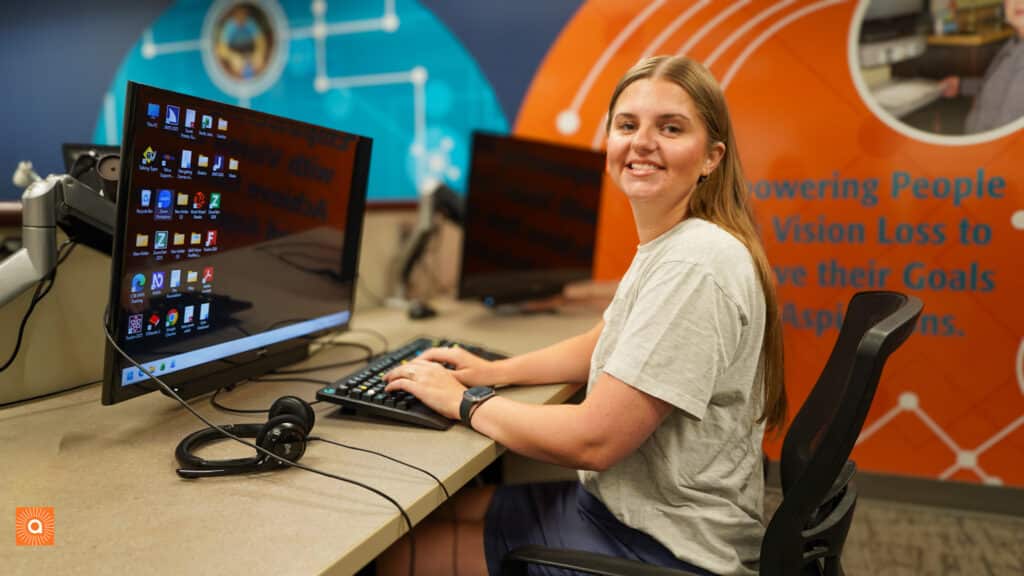
“I remember finishing my studies in August and by October I couldn’t even see my computer screen anymore,” she admits. “It was just such a blessing that I finished my degree right when I did and was able to use what vision I had left.”
Riley learned about Alphapointe from her vocational rehabilitation counselor in the state of Kansas, and began attending Alphapointe’s Comprehensive Rehabilitation Program in June of this year.
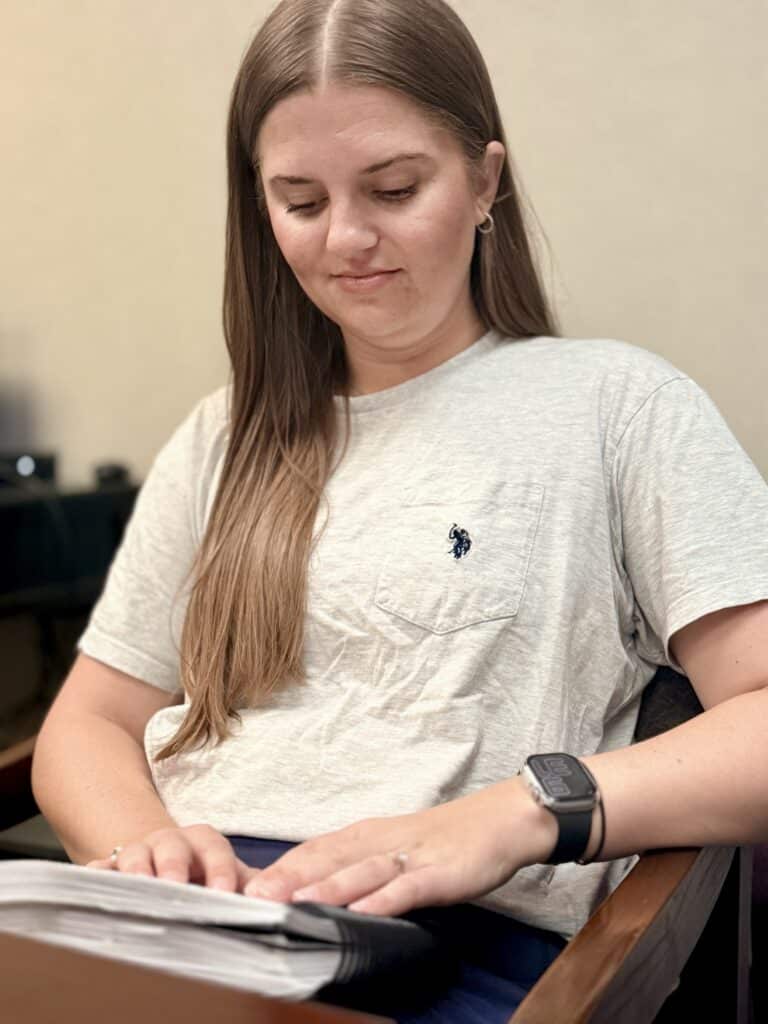
“My time at Alphapointe has been extremely beneficial,” says Riley. “The lessons are very customizable, so I am able to learn at my own pace, and I take joy in being able to take notes in church again or just read a book instead of having to listen to it. If I want to go get a coffee one day, I can do that without being reliant on my husband or a friend”
What the Future Holds
Riley is now an officially licensed therapist in the state of Kansas and her goal is to work with families, couples and children.
“I know that I was put on this earth to help people, and that is exactly what I’m going to do,” says Riley.
Currently, there is no cure for Usher Syndrome, and Riley is well aware that her vision will continue to diminish. Despite that, she is not discouraged and continues carry her head high, always with a smile on her face, and the confidence to continue walking toward a future that she wants … and that she designed herself.