Through Our Eyes: Cane in Hand
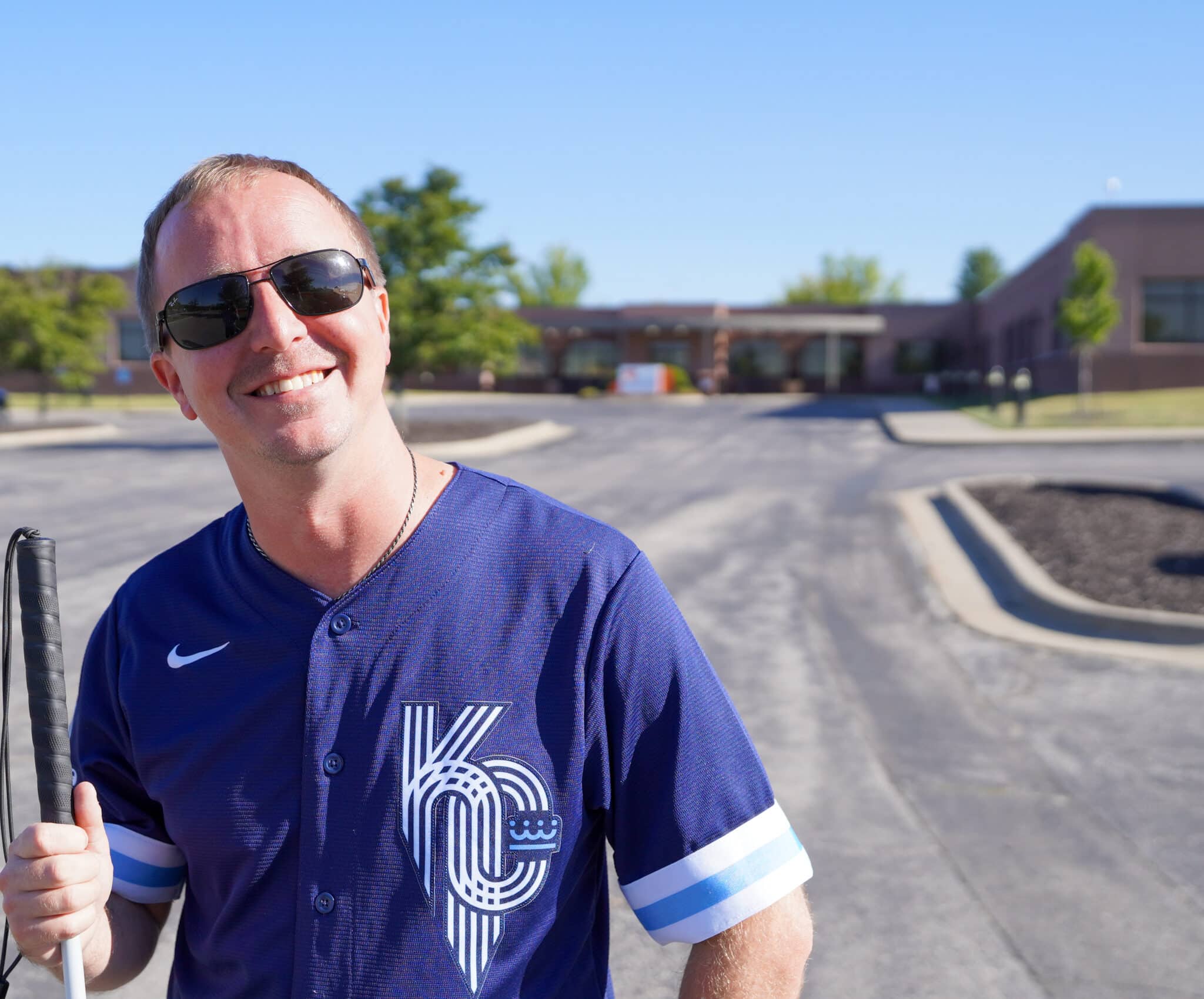
To say that my cane and I had a strained relationship while I was growing up would be an understatement. My cane and I were estranged – mostly – only making use of it when I was forced to by my parents and my orientation and mobility instructor.
My method for being able to navigate a new environment without a cane is what is known as mental mapping. Whenever I started at a new school, I would come into the building a few days early while it was empty and walk the building until I had it memorized.
I did this with any new environment, so that I could rely on my memory to guide me instead of that cane. I kept this practice going until I graduated high school, using my cane only when I absolutely had to.
As a young client at Alphapointe in 2008, I learned all the necessary skills I needed to travel independently with a cane, But I set the cane aside once more after graduating from the Alphapointe rehab program.
“I don’t need a cane.”
As I suspect with most 20-year-olds, I thought I was invincible. Case in point: As I stood on a street corner, preparing to cross a busy four-way intersection, I stood there without a cane so there was no visual indication for drivers that I could not see. “I don’t need a cane,” I told myself. “I know how to cross streets; I know what I’m doing”
I Listened carefully to the parallel and perpendicular traffic as I had been trained to do, stepped out into the street boldly and with confidence … and felt my body get a slight clip by a side mirror as a car sped right passed me. Had I taken a single step further I would have been hit straight on, possibly hospitalizing me. Or worse. At that point I remember thinking to myself, “I’ve got to start using my cane.”
Target On My Back
I didn’t avoid my cane as a way to escape the idea of my blindness. Instead, I think I wanted what most teens wanted: just to blend in. And I felt that walking through life with a stick held out in front of me would make that nearly impossible. The cane is absolutely a tool, the most useful and important tool in the arsenal of those with blindness. But it is also a label, a symbol to those around you that you are different, that you don’t fit in with “normal” society. Or that’s how I felt anyway.
Others have echoed my feelings. “I felt like there was a target on my back,” says Alphapointe staff member, Romia Hall.“I felt like I took that cane, and went from being strong and independent to being a victim immediately.”
My Close Call
After being clipped by a car, I realized that maybe the cane isn’t such a bad idea. For me or anyone else who needs it. The cane might cause some to have preconceived notions about me but, more importantly, it will encourage most others to pay attention and jump in to help if they can.
For the sighted community, seeing someone with a cane out in public doesn’t spread judgement, it spreads awareness. What it does for me is even more important. It helps me be independent, which means I’m free.
White Cane Safety Awareness Day
We recently celebrated White Cane Safety Awareness Day on October 15th, 2026, and as I sit in my office writing this piece, my own white cane hangs on a hook right beside my office door. There are so many pieces of technology in my life that make living with vision loss easier and more accessible but, in this world of ever-developing tech and groundbreaking tools, the white cane still remains the most valuable piece of equipment someone with vision loss can have.
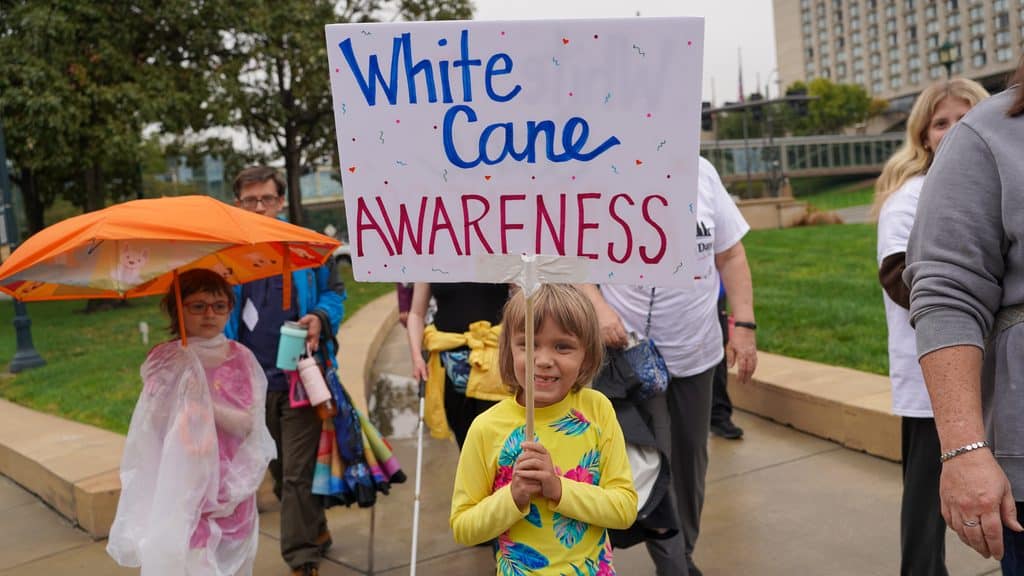
The white cane quite literally gives someone like me the ability to move, and to do so safely, independently, and with confidence. I used to think it was a symbol of how I was different from everyone else. Now I know it’s a symbol of how much I’m capable of and how far I can go.
Now, when I take up my cane, I do so without shame or embarrassment; rather, I grab it with pride and excitement as I wonder where it will take me next.