Through Our Eyes: Connecting the Dots
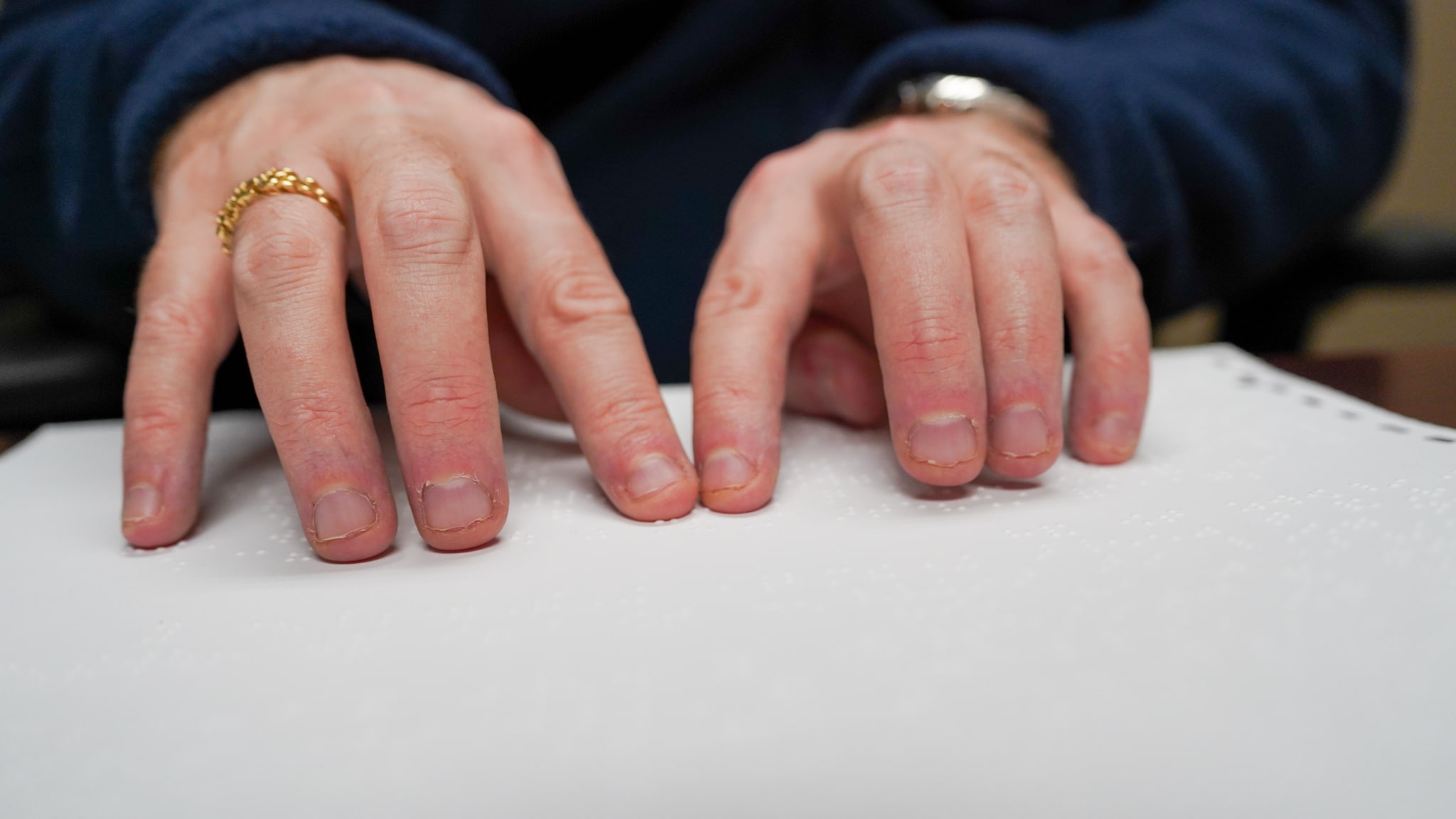
This edition of “Through Our Eyes” was written by Cameron Black, Alphapointe Content and Community Relations Specialist, in honor of Braille Literacy Month and the life-changing power Braille has for those living with vision loss.
…
Upon entering the bedroom at the end of the hall, you’d quickly notice the princess tent filled to bursting with stuffed animals, the small bed with its cupcake sheets and pink sheer curtain surrounding the bed frame, and dress-up clothing and capes hanging from hooks on the wall.
You’d likely assume the room belonged to a young girl. And you’d be right. It’s my daughter’s room.
Along the wall there is a bookshelf stuffed to overflowing with books. Instead of print, however, these books are filled with raised dots. Nearby, my daughter sits – where she often does – on the bed. A large book is spread open on her lap.
“Here Daddy,” she said, handing me the book, “you read a page, and then I’ll read a page.”
“Alright sweetie,” I answered, taking the volume from her and spreading it across my own lap.
And with that, we sat in the dark room, my fingers moving over the raised dots, while my vocal cords made all the necessary silly voices. When I reached the end of the page, I passed the book back and my daughter quickly found where I had left off and began reading.
Braille at a young age
I guess I started learning Braille probably around the time my sighted peers would have begun learning print. I have memories of being about 4 and sitting in front of a Braille writer learning the alphabet and how to spell my name. This type of Braille is known simply as grade one Braille. After that you get into grade two Braille, (also known as contracted Braille), and after that might come Nemeth Braille, which is used primarily for math. That Braille writer and I would become well acquainted since I had to carry it from class to class in grade school.
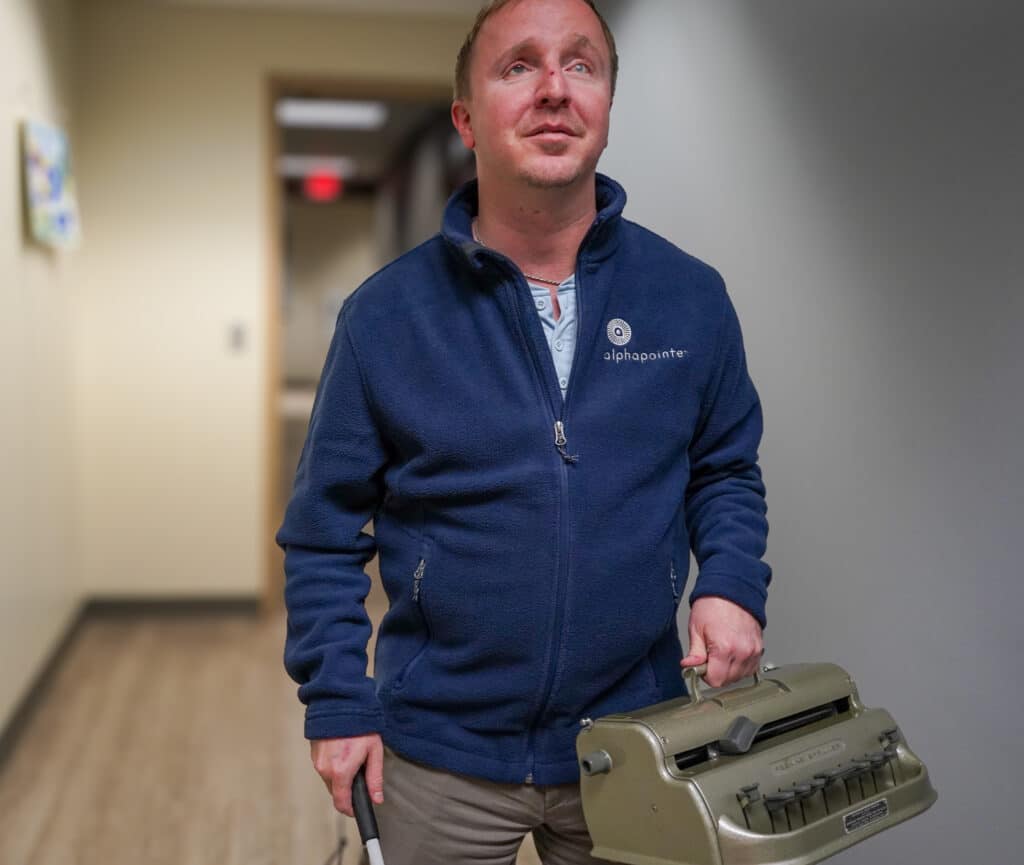
It’s a little tough to remain inconspicuous when other kids are quietly taking notes in a classroom while I was clanking away on a Braille writer that also dinged every time I reached the end of a line.
At one point, I was asked to leave a classroom and do my work in the empty cafeteria because I was “distracting the other students.”
Braille through the years
I remember the first time I discovered that my need for reading and writing Braille actually allowed me to be just a little bit sneaky. I began to develop a strong passion for reading, which is a passion that still exists today. Thanks to Braille, I was able to read in the dark, which allowed me to stay up reading long after my mother had tucked me into bed. When I heard her coming to check on me, I simply laid down and hid my open book under the blankets.
Eventually storage space became an issue. The unabridged version of “The Count of Monte Cristo” for example, is between 15-20 large Braille volumes. That’s just one example. In a film starring a blind Denzel Washington, he carries the complete bible but it’s simply one volume. Any Braille reader would tell you that he would have needed a wheelbarrow to carry the entire bible.
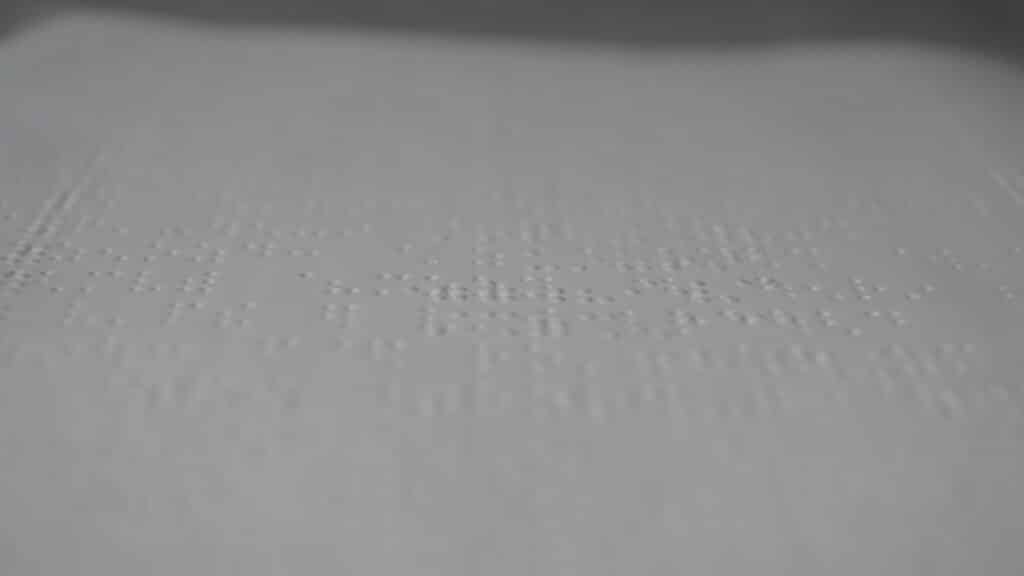
Thanks to advancements in technology, once I reached middle school, I no longer had to lug a Braille writer from class to class and, instead, was given my first electronic Braille note taker. What a game changer.
Braille in the workplace and at home
Now here I am approaching middle age, working a job that I love and, because of Braille, my work is possible. Here at work I do a fair amount of voiceover work and narration, and thanks to technology that is available, I can get scripts in Braille in a matter of minutes.

Braille allows me to lead an independent home life as well. I have Braille labels on spices for when I am cooking, receive my household utility bills in Braille, have access to Braille schedules for football, baseball and basketball, and most importantly, with a large selection of kids’ books in Braille, I am able to read bedtime stories to my two small children. Incidentally, I currently have Moby Dick in Braille in my living room … and it’s only seven volumes.
How far it’s come
In my short 37 years, I worked with a slate and stylus, a Braille writer, Braille embossers that take up an entire desk, and numerous different types of electronic Braille devices and refreshable Braille displays. It is because of Braille – an incredibly complex technology developed by Louis Braille in 1824 – that I was able to get through school with sighted students. It is because of Braille that I developed a life-long passion for reading and now I can read to my kids. It is because of Braille that I can do my job and live as a confident, independent adult. And it’s because of devices like the refreshable Braille display that I was able to do live play-by-play for an NBA playoff basketball game.
Every day, thousands of men and women with vision loss are learning to read Braille and discovering its practical applications for their everyday lives.
It is because of Braille, that the world is at our fingertips.